Monday, March 7, 2016

UPDATE: Rolling Infields: When, Why, & How


Spring is slowly arriving. Many coaches are pushing to get on their infields as soon as possible. 

Regardless of the infield mix, the material will frost heave over the winter. So, you must roll your infield in the spring, ideally before you have any traffic on your infield. Now, the questions are when, why, and how? 


WHEN? 

You will want to roll you infield when there is still moisture in the mix, but the mix is not too wet. When is this? When you can walk across the infield and you settle the frost heave, but there is no material sticking to the bottom of your shoes. Roll the conditioner and mix in multiple passes. 

WHY? 

Rolling accomplishes a couple of goals. First, it settles your infield so your mix will hold its grade and you will not have your conditioner/ topdressing migrate into your base material. Also, the infield mix will also be firmer. This will allow for the ball to play down and true from the beginning of the season. 

HOW? 

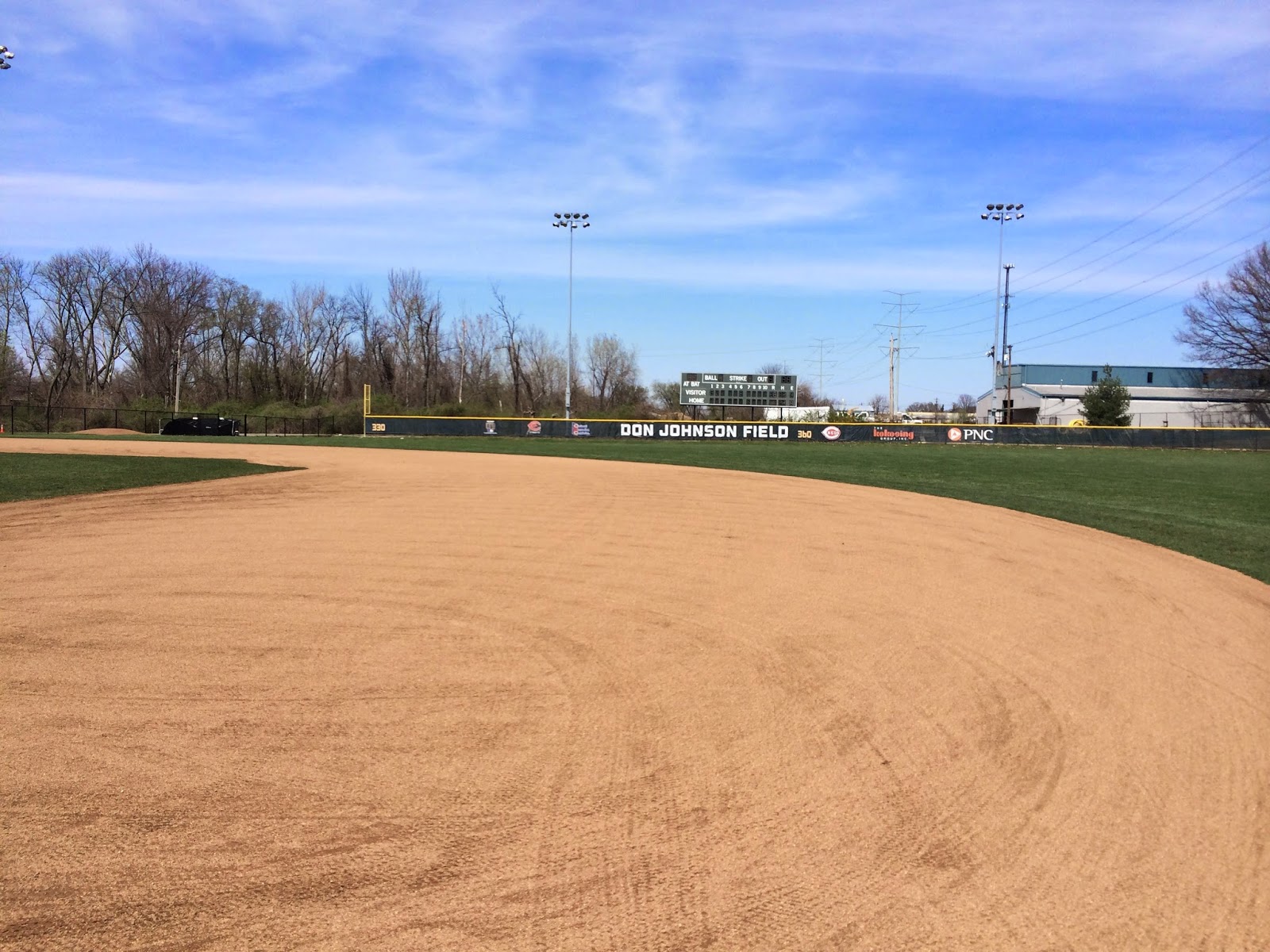
It is best to roll with a 3 ton duel drum roller (pictured above). If you can’t get a 3 ton roller, any roller is better than not rolling at all. 

Remember, roll your infield as often as possible with a small pull behind roller as well all spring until the weather moderates. 

Good luck to those groundskeepers and coaches looking to get their fields ready.  

Play on!
--Jamie
@JamieMehringer

Infield Not Ready To Roll 

Infield Ready To Roll

Engineered Soil


Download the printable Smart Turf sheet - Rolling Infields: When, Why, & How

This post original post can be viewed here. 

Friday, March 4, 2016

Updated: Which Calcined Clay Product Is Best For My Field


Calcined clay is typically a montmorillonite clay that is fired (calcined) at a temperature of 1500 degrees. At that time, the clay becomes a ceramic and is screened for processing and bagging.

The answer is in the details.  There are many suppliers of calcined clay products in the country. Pro’s Choice, Turface,  and Diamond Pro are the most popular.

Typically, the Professional/Select gradation will have over 80% of the material retained on the 16 screen. Drying Agent/Rapid Dry will have 80% pass through the 30 mesh.

Due to the fact that the Drying Agent/Rapid Dry gradation consists of a smaller particle size, it will cover the surface area of a puddle better and thus dry the wet area quicker. With that said, the smaller particle size will quickly be mixed/lost into the infield mix profile

Also, as a general rule of thumb, adding a smaller particle size to your infield mix profile can lead to a poorer performing infield mix over time.

The Professional/Select size of calcined clay will also dry a puddle or wet area very effectively.  Furthermore, the material has a better chance to stay on the surface after the rain event and continue to provide a topdressing. Always ensure that the correct depth of conditioner is present. 

For my money, I would stock only one product, that is the Professional/Select sized product to use after rain events. You get more bag for your buck. There is a reason why these products are used at the highest levels of play.


Play on!
--Jamie
@JamieMehringer  


Download the printable Smart Turf sheet: Which Calcined Clay Product Is Best For My Field?

View the original post here.

UPDATE: Preparing An Infield After A Rain Event

I get this question many times, “How do I prepare my infield after a rain event?” The first step is to have a balanced infield mix profile that is laser graded. Also, the correct depth of conditioner is important to take rain events effectively. With that said, let me take you through the simple steps of getting an infield ready to play after a rain event.
BALANCED INFIELD MIX PROFILE
So, what makes a good mix? A good mix has many characteristics, but the most important ones include: traction, playability, and consistency. A mix should provide consistent traction, the ability for athletes to play the game without sliding/slipping around the infield. The infield should play consistently in a variety of weather conditions.
Infield mixes have three components, sand, silt, and clay. Sand, the largest soil particle, provides the structural integrity of the infield. The targeted range is 58-75% and over 50% of the sand should be retained on the medium sieve. Silt, the second largest soil particle, acts as a bridge between the sand and the clay. 10-35% is the acceptable range. Clay, the smallest soil particle, provides the color of the mix and retains moisture. 15-35% is the acceptable range. The take home message on silt/clay is that the ratio of silt/clay (SCR –more on that later) should NEVER be higher than 1:1.
DEPTH OF INFIELD CONDITIONERS
How deep should the conditioner be on a given field? The answer depends on the level of play as well as the base soil.
For an infield that has a mix with a high silt to clay ratio (SCR - 2.5), approximately 1/4 inch of conditioner is the recommended depth for the surface. An infield with an engineered soil and a balanced silt to clay ratio (SCR - 1.0), should use a lesser amount of conditioner. Approximately 1/8 inch of conditioner is the recommended depth for the surface.
DEPTH OF INFIELD CONDITIONERS: IT DEPENDS ON THE INFIELD MIX AND THE LEVEL OF PLAY
There are a few instances when a greater depth of conditioner should be considered:
  • Infield mixes with a high SCR
  • Difficulty in keeping moisture in an infield (recreational play)
  • Infield mixes with a great amount of fine and very fine sand
  • Infield mixes that tend to become too firm in dry weather
The goal is to create a top 1/4 inch that is managed to allow for cleat-in and cleat-out play.
PREPARING AN INFIELD AFTER A RAIN EVENT CASE STUDY: P&G REDS URBAN YOUTH ACADEMY
The location is the new P&G Reds Urban Youth Academy in Cincinnati, OH. The infield mix is a “hybrid mix.” The mix consists of 3 inches of Alvis Materials infield mix with 24 tons of FieldSaver50 and 24 tons of Dura Edge Classic from Natural Sand Company blended throughout the 4 inch profile. Finally, the infield is conditioned with 120 bags (3 tons) of Turface Hertiage Red Calcined Clay.
First, nail drag the infield to a depth of 1/4 inch using the VibraFlex on the ABI Force.
Note: The goal is to break the surface tension and allow the conditioner to work. DO NOT rip the infield up at depths exceeding 1/2 inch. Using the simple “key test” is a great way for staff and volunteers to monitor depth of nail dragging.
Within 30 minutes the infield is starting to dry and the conditioner is ready for a finish drag.
The infield, after a finish mat drag, is ready for play within an hour of beginning the process with little to no disruption to the infield surface. Not one bag of calcined clay or a drying agent was used to get this field ready to play.

The bottom line: If the right materials are installed and managed correctly, infields can take rain events and be ready for play without the need for a tremendous amount of drying agents.

Play on!
--Jamie
@JamieMehringer
Infield Prior to Nail Dragging

First Couple Passes

"Key Test"

Infield After a Finished Mat Drag


Downland the printable Smart Turf sheet: Preparing An Infield After A Rain Event

View the original post here.

Wednesday, February 24, 2016

#LifeOnTheRoad - Dugout Storage Design

This is another post in a periodic series entitled #LifeOnTheRoad.  The background is simple. During my travels I  encounter many grounds managers/coaches doing great things.  Because of this, I have started this series.  The goal - expose more grounds managers, coaches, architects, etc to areas of facility and sports turf maintenance that may be implemented to their facility/design.

This past week I was in Ada, Ohio.  A quick site visit at Northern Ohio University lead me to a great dugout storage design.  


The design incorporated a paved path to the dugout storage where a sliding door was located.  The design allowed for a pallet of material to be placed in the dugout.  A simple, yet effective design.  A piece of the design that was not incorporated but would be nice in the future is another sliding door on the field side.  Simply mount a shelf to hold water/Gatorade when in season.  When needed the door could then slide open.

Go to j-dturf.com to learn more about J&D Turf

Play on!
--Jamie
@JamieMehringer

Tuesday, February 16, 2016

UPDATE: Applying Pre-Emergent Herbicides on Sports Turf

Spring is just around the corner and with spring comes the arrival of crabgrass control applications. The use of crabgrass pre-emergent herbicides on sports turf must be carefully considered. Will I need to overseed in the spring? Will I need to overseed the entire field or just certain areas? Is the option to overseed more important than crabgrass pressure later in the summer? All good questions, let’s work to an answer.
HOW DO THE PRODUCTS WORK?
First of all, let’s take a look at how crabgrass pre-emergent products work.
Research has shown that applications should be made when average daily soil temperatures reach 57 to 64 degrees at a 1 inch depth. Following application, a barrier will form that will inhibit crabgrass seedling emergence.
Keep in mind, the barrier will also inhibit grass seed emergence! How do you know when you should apply if you do not want to check daily soil temperatures? Simply go to the Growing Degree Day Tracker. (GDD Tracker) The tracker is a joint effort from Michigan State Turfgrass, Purdue Turfgrass and the Midwest Regional Turf Foundation (MRTF). The GDD Tracker will provide updates on when the product needs to be applied. Typically, pre-emergent products need to be applied prior to April 1 in the southern third of the state of Indiana, by April 15 in the middle third, and by April 30 in the northern third.
WHAT ARE THE BEST PRE-EMERGENT OPTIONS?
So, the plan is to apply a crabgrass pre-emergent herbicide product. The timing has been determined. Now the question is, “What product should I apply?”
To keep it simple consider two products:
1. Dithiopyr (Dimension)
2. Prodiamine (Barricade)
Advanced Turf Solutions offers both products. Please call for options as the products are available in both granular and liquid formulations.
I MISSED MY APPLICATION. CAN POST-EMERGENT APPLICATIONS BE MADE?
Yes. Careful consideration should be made to select the best products as some pre-emergent products (Prodiamine) will not be effective. My recommendation for early season (April through early May) is Dithiopyr as the product is effective on crabgrass in the one to three leaf stage. Liquid applications are recommended.
TIP – If dormant seeding was used on the playing surface, a late spring application of Dithiopyr (after the turfgrass seed has germinated) will control young crabgrass while also creating a barrier for any crabgrass seed that has not germinated. Other post-emergent products include Fenoxyprop and Quinclorac (Quin Pro). As always, please check product labels for rates.
TIPS TO REDUCE CRABGRASS PRESSURE:
  • Maintain a dense turf stand
  • Irrigate turfgrass with deep and infrequent cycles
  • More than half of your total nitrogen should be applied from September through November
  • When possible, water in pre-emergent products
THINGS TO CONSIDER BEFORE A PRE-EMERGENT HERBICIDE APPLICATION:
  • Do I need to overseed?
  • Should I avoid high traffic areas where I know I will be overseeding?
  • Would I rather overseed or control crabgrass?
​
Download the printable Smart Turf sheet - Pre-Emergent Herbicides: Timing is Critical
This post originally appeared in the Smart Turf Blog.

UPDATE: Removing Snow From Athletic Fields

Smart Turf Tip: Removing Snow From Athletic Fields

Simply, take a tarp drum and strap it to a tractor bucket. Now you have a plow that will not cause damage to the turf. 

How do I get my infield ready to play after a snow event?

First, DO NOT get in a hurry to play. I understand that the season is short, but is it really worth compromising the grade of your field to get in one practice or game?
If the decision is made to plow the field, take the necessary precautions. The Sports Turf Managers Association offers a great guide, Snow Removal on Natural and Synthetic Athletic Surfaces, that is worth checking out.

TIP: If snow cover is extremely deep, consider using black sand to speed up the melting process.

Once the snow has cleared/melted, most infields should be rolled from the snow event and the winter freeze and thaw cycle. To determine if the field can be rolled, simply walk across the surface, if the field settled under foot, but does not stick the bottom of you shoe, it can be rolled.
If the field has not been conditioned, please take this time after rolling to condition the infield.
Finally, this is another time where there is tremendous benefit of using an engineered soil as your infield mix.

Play on!
--Jamie
@JamieMehringer
Download printable Smart Turf sheet: Removing Snow from Athletic Fields
View the original post here.

Tuesday, February 9, 2016

Tricks of the Trade - Installing a Quick Coupler for Softball Infields


I made a recent visit to Southeastern University Softball.  This field was constructed in 2013 by J&D Turf.  While on site I took a quick photo of the quick coupler we installed during the construction.  The 1 1/2 inch quick coupler provides a water source for the infield using either an irrigation head or a one inch hose.  A simple and easy way to keep the infield properly hydrated.


This allows for proper moisture content of the infield playing surface for practices and games.  Controlling moisture is a the most critical component to the proper maintenance/maintaining proper playability of baseball and softball infields.

Go to j-dturf.com to learn more about J&D Turf.

Play on!
--Jamie
@JamieMehringer