Many times grounds areas are are full of different types of shoes.
Rain shoes, tarp shoes, running shoes, game shoes etc. How do you keep
them neat, clean and orderly? Consider building a shoe rack. Here is a
photo of the grounds crew shoe rack at Victory Field.
Simply using 3/4 inch plywood and sealing it with black paint did the
trick for this application. Then, each area is labeled for each grounds
crew member.
Go to j-dturf.com to learn more about J&D Turf.
Play on!
--Jamie
@JamieMehringer
Wednesday, February 7, 2018
Tuesday, January 30, 2018
A Quick Winter Project - Tricks of the Trade - Wrapping a Tamp
Do
you have issues with mound clay and infield mix sticking to the bottom
of your tamp? If so, considering taping a plastic bag to the bottom of
the tamp. The following photos were taken while two separate tamps were
wrapped at Indiana Tech University.
Tamp #1
Tamp #2
Go to j-dturf.com to learn more about J&D Turf.
Play on!
--Jamie
@JamieMehringer
Monday, January 22, 2018
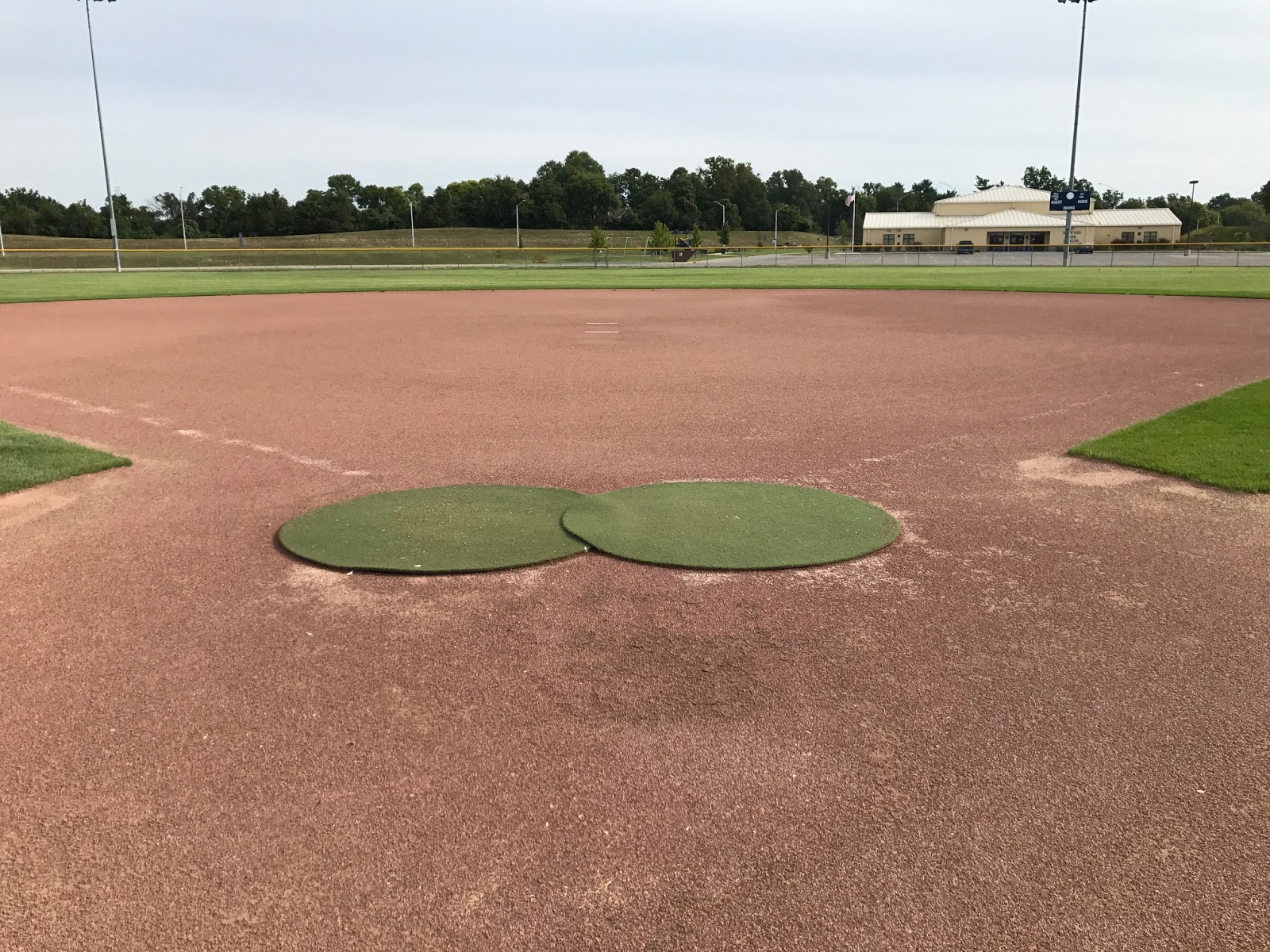
Tricks of the Trade - Using On-Deck Circles for Moisture Management
It is best to use a tarp along with the circles, but this is a great "budget" approach.
Go to j-dturf.com to learn more about J&D Turf.
Play on!
--Jamie
@JamieMehringer
Wednesday, January 3, 2018
Tricks of the Trade - Building a Base Rack - A Great Winter Project
How many of you are dealing with bases lining the floor of dugout storage rooms?
Is building a base rack a complicated design? Expensive? No, just a few 2x4's. Let's look into the process.
First a 2x4 was cut and installed on the cement block wall using Tapcon Anchors. Next, shorter 2x4's were screwed into the wall installed next to the concrete block. Note the 2x4's are spaced at the width of the anchor. Finally, a final 2x4 was installed across the smaller 2x4 running parallel to the 2x4's installed into the cement block. Here is the process in photos:
As you can see, this was a quick and simple project. Material costs were less than $50
Go to j-dturf.com to learn more about J&D Turf.
Play on!
--Jamie
@JamieMehringer
Wednesday, December 13, 2017
#LifeOnTheRoad - Infield Mix Drainage
This is another post in a periodic series entitled #LifeOnTheRoad. The
background is simple. During my travels I encounter many grounds
managers/coaches doing great things. Because of this, I have started
this series. The goal - expose more grounds managers, coaches,
architects, etc to areas of facility and sports turf maintenance that
may be implemented to their facility/design.
I visited a new construction recently and the owner was extremely proud that they were able to “push the infield drainage through the budget.” What is the problem with this?
An engineered soil (in this case DuraEdge Classic) will not move water vertically to the drains. These drains will not move any water. What is the answer? Install drainage off the back arc.
Go to j-dturf.com to learn more about J&D Turf.
Play on!
--Jamie
@JamieMehringer
Sunday, November 26, 2017
#LifeOnTheRoad - Dugout Heaters
This is another post in a periodic series entitled #LifeOnTheRoad. The background is simple. During my travels I encounter many grounds managers/coaches doing great things. Because of this, I have started this series. The goal - expose more grounds managers, coaches, architects, etc to areas of facility and sports turf maintenance that may be implemented to their facility/design.
Today’s #LifeOneTheRoad posts takes us to the University of Kansas Softball. The facility at Arrocha Ballpark at Rock Chalk Park is second to none. In the dugouts heaters were installed to keep the players warm on the cool spring and fall days.
Go to j-dturf.com to learn more about J&D Turf.
Play on!
--Jamie
@JamieMehringer
Today’s #LifeOneTheRoad posts takes us to the University of Kansas Softball. The facility at Arrocha Ballpark at Rock Chalk Park is second to none. In the dugouts heaters were installed to keep the players warm on the cool spring and fall days.
--Jamie
@JamieMehringer
Monday, November 6, 2017
A Tale of 2 Walk-ups
Walk-ups are common on both baseball and softball playing surfaces. If the decision is made to install walk-ups, ensure the design will be tailored to the desired solution. IE - Reduce/eliminate traffic stress in this high traffic area. How is this accomplished? Simple “flair” the walk-ups as they get further away from home plate. Also ensure the walk-ups are wide enough to accept all traffic - both foot traffic and vehicle traffic. Here are two examples:
#1 - Walk-ups too narrow. Note the narrow width of the walk-up.
#2 - Walk-up in a “flair” design. Note the lack of wear around walk-up.
Proper design will lessen or eliminate traffic stress. Go to j-dturf.com to learn more about J&D Turf.
Play on!
--Jamie
@JamieMehringer
#1 - Walk-ups too narrow. Note the narrow width of the walk-up.
Play on!
--Jamie
@JamieMehringer
Subscribe to:
Posts (Atom)